
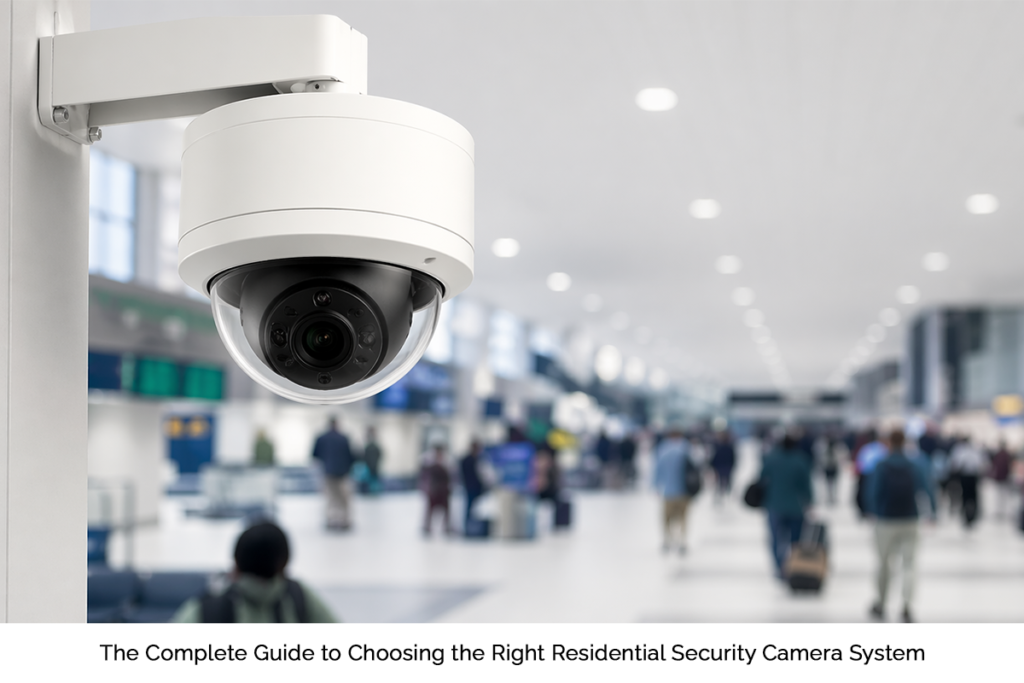
You notice it late; maybe after a neighbour mentions a break-in. Or when a package goes missing. Suddenly, security matters more than it did yesterday.
That’s where a Residential Security Camera System steps in. Not just as a deterrent; but as control. Visibility. Peace of mind, even when you’re miles away.
But here’s the catch; choosing the right system isn’t as straightforward as it looks. Wired or wireless? Indoor or outdoor? Smart or basic?
Let’s break it down.
Understanding a Residential Security Camera System
A Residential Security Camera System is more than just cameras mounted on walls. It’s a connected ecosystem; devices working together to monitor, record, and alert.
Typical components include:
- Cameras (indoor and outdoor)
- Network or wireless connectivity
- Storage (cloud or local)
- Mobile access for real-time monitoring
Modern systems go further; AI detection, motion alerts, night vision. Even facial recognition in some cases.
Simple setup. Complex capability.
Why Homeowners Are Switching to Wireless Solutions
Wires are reliable. But they’re messy. Installation-heavy. Hard to scale.
That’s why home surveillance cameras wireless are gaining traction. Fast.
Key advantages:
- Easy installation; no drilling across walls
- Remote access via mobile apps
- Flexible placement
- Scalable; add more cameras anytime
You installed one today. Add another next month. No technician needed.
Still; wireless systems depend on strong Wi-Fi. That’s the trade-off. Weak signal, weak performance.
Outdoor Security: Your First Line of Defense
Before anything happens inside, it starts outside. Entry points. Driveways. Blind spots.
That’s where home surveillance cameras outdoors become critical.
What makes outdoor cameras different?
- Weather resistance (rain, heat, dust)
- Night vision capability
- Motion-triggered alerts
- Wide-angle coverage
You don’t just record events; you prevent them. A visible camera alone can stop unwanted activity. Sometimes, that’s enough.
Indoor vs Outdoor: Do You Need Both?
Short answer; yes. But it depends on your setup.
- Outdoor cameras = prevention + perimeter security
- Indoor cameras = monitoring + evidence
A strong Residential Security Camera System combines both. Covers entry points outside. Keep an eye inside.
Balanced coverage. No blind zones.
Features That Actually Matter
Not all cameras are equal. Some look good on paper; fail in real scenarios.
Focus on what counts:
1. Video Quality
Go for at least 1080p. Blurry footage won’t help when it matters.
2. Night Vision
Most incidents happen after dark. Don’t compromise here.
3. Motion Detection
Smart alerts. Not constant recording. Saves storage; and your time.
4. Remote Access
Check your cameras anytime. Anywhere.
5. Storage Options
Cloud vs local. Subscription vs one-time setup.
Common Mistakes to Avoid
People rush this. Regret later.
- Buying cheap cameras with poor resolution
- Ignoring Wi-Fi strength for wireless setups
- Placing cameras too high or at wrong angles
- Skipping outdoor coverage completely
Small mistakes. Big consequences.
Final Thoughts
Security isn’t about fear; it’s about control. Knowing what’s happening, even when you’re not there.
A well-planned Residential Security Camera System, paired with the right mix of home surveillance cameras wireless and home surveillance cameras outdoor; gives you that control.
You don’t need the most expensive setup. You need the right one.
And once it’s in place; you’ll wonder why you waited.